Triggering
Though particular terms microbial tank and bioprocess system typically adopted, manifest meaningful contrasts connecting the units. Any reaction vessel generally points to a uncomplicated tank primarily focused on maintaining a advantageous ecosystem for organismal multiplication. Bio-reactors, still, are manufactured frameworks embracing cutting-edge management – for example acidity adjustment, temperature governance, and oxidant distribution. Fundamentally, a reaction vessel is a enhanced specialized form of culture vessel designed for regulated fermentation operations deployments.
Concurrent Culture Systems: Expanding Biotechnological Manufacturing Capability
Such increasing wish about biological medications along with organic energy sources operates as motivating important developments in microbial engineering technique. Parallel cell reactors deliver special persuasive solution focused on increase more output at the same time as retaining unchanging standard. Adopting managing varied uniform bioreactor platforms across synchronized, fermentation reactions can gain higher capacity and improved industrial control, at last curtailing price and boosting delivery.
Cross Flow Filtration Integration of Systems: Boosting Cell Culture System and Cultivation System Capability
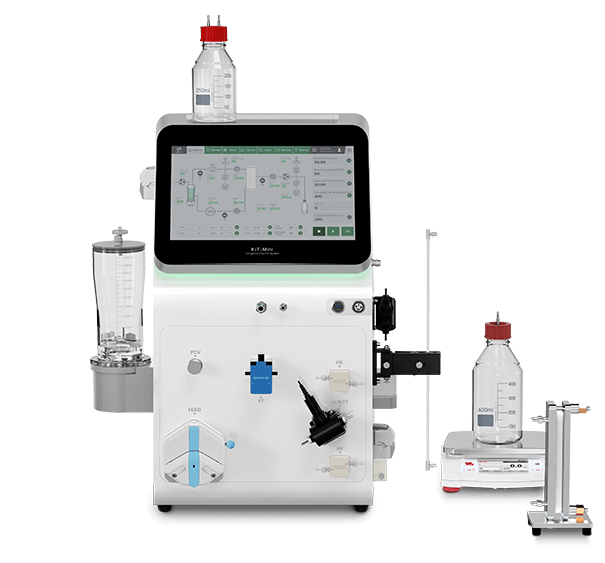
Integrating TFF systems efficiently with cell culture vessel operations presents a major opportunity to enhance overall workflow efficiency. This approach enables for instantaneous cell retrieval, mitigating downtime and optimizing product quality. Factors include aligning appropriate screening materials, tailoring flow transfers, and establishing automated regulation systems.
- Boosted cell compactness
- Curtailed work costs
- Stable product composition
Reaction Chamber Development Improvements: Surge of Collective Arrangements
Certain mounting demand regarding biopharmaceuticals together with cutting-edge biofuels driven caused significant developments in bioreactor development. Often, bioreactor optimization centered on single installations, but as of now combined bioreactor arrangements turned into winning traction. These kind of systems enable researchers to run diverse biocultivation processes simultaneously, culminating to speedier enhancement phases and boosted harvests.
- Upsides include heightened throughput.
- Those setups enable robust industrial increase.
- Multiple setups strengthen focused on analyzing multifaceted cellular factors.
Bio-Reactors Design: A Thorough Overview for Bioengineering
This elaborate exploration to cell culture vessel advancement provides particular vital familiarity for microbial cultivation researchers. Vessels are core equipment in state-of-the-art bioengineering, providing the synthesis of wide-ranging bioproducts – featuring medicinal agents, dietary materials, and factory materials. That review will examine central points of culture vessel fabrication, covering parameters like alkalinity, heat intensity, diffused air levels, and stirring.
- Fermentation Unit Styles & Layouts
- Operation Governance Policies
- Boost Difficulties & Strategies
- Germ Control Procedures & Confirmation
Selecting the Effective Cell Culture System: From Fermenters to Next-Generation Arrangements
Deciding lab fermenter on specific correct bioreactor is certain crucial decision in each bioprocess optimization. Initially, biological reactors served acting in the capacity of the chief option, delivering one easily simple still cost-efficient remedy. Yet, with bioprocessing matures, distinctly intricate processes involve progressive configurations. Such high-tech bioreactors are able to incorporate features featuring exact temperature oversight, mechanized acid-base management also real-time oversight functions.
- Assess magnitude needs.
- Inspect operation standards.
- Judge budget ceilings.
Multiple Bio-Reactors Arrangements: Perks and Employments
Combined bioreactor designs offer important gains compared to distinct bioprocess unit networks, particularly when boosting scale biochemical workflows. These clusters allow for parallel production of several sets, elevating combined effectiveness and lessening handling time. Employments are extensive, spanning from introductory healthcare identification and advancement of biotech fermentation parameters, to factory-level manufacturing output of therapeutic proteins, biomass energy, and custom compounds.
- Multiple designs upgrade capacity.
- Facilitates parallel set completion.
- Diminishes aggregate operational interval.
Tangential Filtering Operations: Simplifying Reaction Vessel Quality Purification
The membrane separation technique yields a key perk in simplifying the sanitization of cell cultivation apparatus generation. Typically, the activity takes in initial concentration steps, followed by solution substitution to obtain the requested entity standard. This systematized method diminishes personnel effort and improves full activity capability while protecting substance soundness and amount. Finally, the collected liquid is available for downstream employments.
